
Spinal Stenosis
What is Lumbar Spinal Stenosis (LSS)?
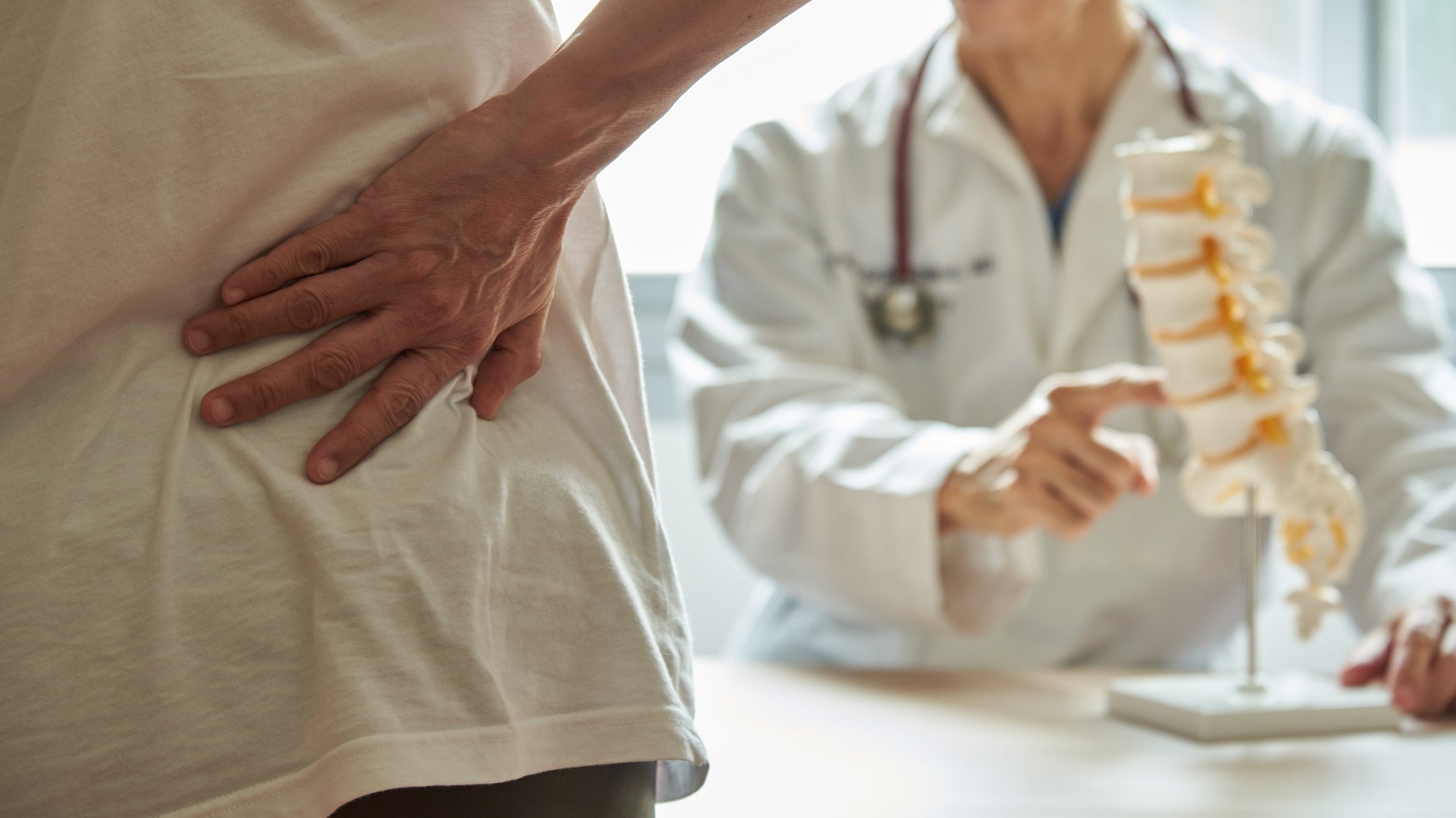
Lumbar spinal stenosis is a common condition that causes lower back and leg pain. It mostly affects people over age 50. In fact, more than 20% of people over 60 have it.
“Stenosis” means narrowing. In this case, the space in the spine narrows and puts pressure on the nerves.
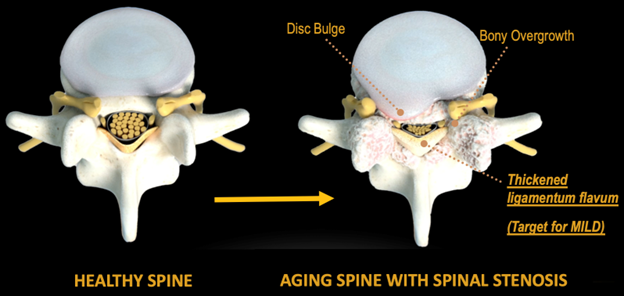
spinal stenosis. The MILD procedure specifically targets the thickened ligament that
compresses nerves and causes symptoms (pain) related to this condition.
Learn more about LSS and various treatment methods below.
LSS can cause:
- Pain, burning, or numbness
- Tingling or heaviness
These symptoms are usually felt in the:
- Lower back
- Buttocks
- Thighs
- Legs
Symptoms often get worse when you stand or walk and improve when you sit or lean forward. They can also affect sleep because body position makes a difference.
If you have these symptoms, talk to a doctor.
Doctors diagnose LSS by:
- Reviewing your medical history
- Performing a physical exam
- Using imaging tests like an MRI
You may be referred to a pain specialist for further evaluation.
In the past, treatment options included:
- Pain medications
- Physical therapy
- Steroid injections
If those didn’t work, surgery was often the only option. Today, there are newer treatments that do not require major surgery.
MILD Procedure (Minimally Invasive Lumbar Decompression)
This is a short outpatient procedure (about 45 minutes) that does not require general anesthesia.
It works by removing small pieces of bone and thinning a thickened ligament that is pressing on the nerves. This creates more space in the spine and reduces pain.
Success Rate:
Studies show that over 85% of patients have less pain and better movement after the MILD procedure. Many people can stand and walk longer with less discomfort.
If MILD is not an option or does not work, another choice is an interspinous stabilization device.
This small device is placed between bones in the spine to:
- Keep the space open
- Reduce pressure on nerves
- Prevent the spine from narrowing when standing
This is a minor outpatient procedure and is less invasive than traditional surgery.
One type of stabilization device is called Minuteman. It:
- Helps keep space between the bones in your spine
- Reduces pressure on nerves
- Takes stress off your joints
- Can also help with other issues like bone slipping (spondylolisthesis)
Studies show it has a low risk of complications compared to traditional spine surgery, especially for older adults.
The best way to decide is to meet with a qualified pain specialist. They will:
- Review your symptoms
- Look at your imaging results
- Identify the source of your pain
Then, they will work with you to choose the treatment plan that is best for your specific needs.
The goal of treatment is to reduce pain, improve movement, and help you get back to your normal daily activities.