
Kyphoplasty

Kyphoplasty for Back Pain from Spinal Compression Fractures
At Saint Alphonsus Comprehensive Pain & Spine, we focus on caring for the whole person, not just treating pain. We work with patients to manage pain using a variety of treatments, not only medication. Our goal is to help each patient live as comfortably and independently as possible.
One treatment that may help reduce or relieve back pain caused by a spinal compression fracture is kyphoplasty. If you meet with one of our board-certified pain specialists, they can explain your condition, discuss treatment options, and help you decide if kyphoplasty is right for you. Complete the form below to learn if you may be a candidate for this procedure.
Frequently Asked Questions
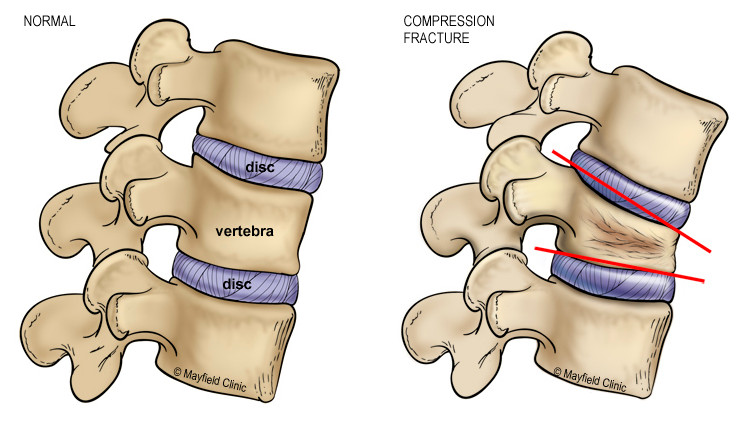
Spinal compression fractures, also called vertebral compression fractures (VCFs), happen when one of the bones in the spine collapses or breaks. They are most often caused by weak bones due to osteoporosis.
VCFs are common. About 1 in 2 women and 1 in 4 men age 50 or older will experience a compression fracture during their lifetime.
The most common symptom is back pain that makes it difficult to do everyday activities.
Some compression fractures cause little or no symptoms, while others can be severe enough to require hospitalization or specialized treatment. These fractures often happen after a minor fall or lifting something heavy. In some cases, even simple activities such as coughing or bending over can cause a fracture if the bones are very weak.
Many patients start with conservative treatments, which may include:
- Pain medication
- Rest
- A back brace
While these treatments help some people, others continue to have pain or worsening symptoms. In those cases, kyphoplasty may be an option to stabilize the fracture and relieve pain.
Kyphoplasty (pronounced KY-foh-plas-tee) is a minimally invasive outpatient procedure, not major surgery.
The goal of the procedure is to stabilize the broken bone, improve its alignment, and reduce pain. Many patients experience pain relief soon after treatment.
Patients often have better results when compression fractures are treated earlier. There is no required waiting period before considering kyphoplasty.
The decision depends on factors such as:
- How much pain you have
- How the pain affects your daily activities
- Whether your symptoms are improving or getting worse
Your doctor can help determine if kyphoplasty is a good choice for you.
Potential benefits include:
- Fast pain relief
- Improved mobility and function
- A quicker return to daily activities
- Better overall quality of life
Research has shown that patients who receive kyphoplasty after a compression fracture often experience less pain and better function than those who do not.
Both procedures treat compression fractures, but kyphoplasty uses a small balloon or device to help restore the shape of the bone before bone cement is placed inside.
This approach can help improve spinal alignment and allows the cement to be placed more precisely. Studies have shown kyphoplasty may provide better pain relief and outcomes for many patients.
Kyphoplasty has been performed for many years and is one of the most well-researched treatments for compression fractures.
Like any medical procedure, it carries some risks. However, research shows that kyphoplasty is generally considered a safe treatment option when performed by trained specialists.