
POEM (Peroral Endoscopic Myotomy)
What Is POEM?
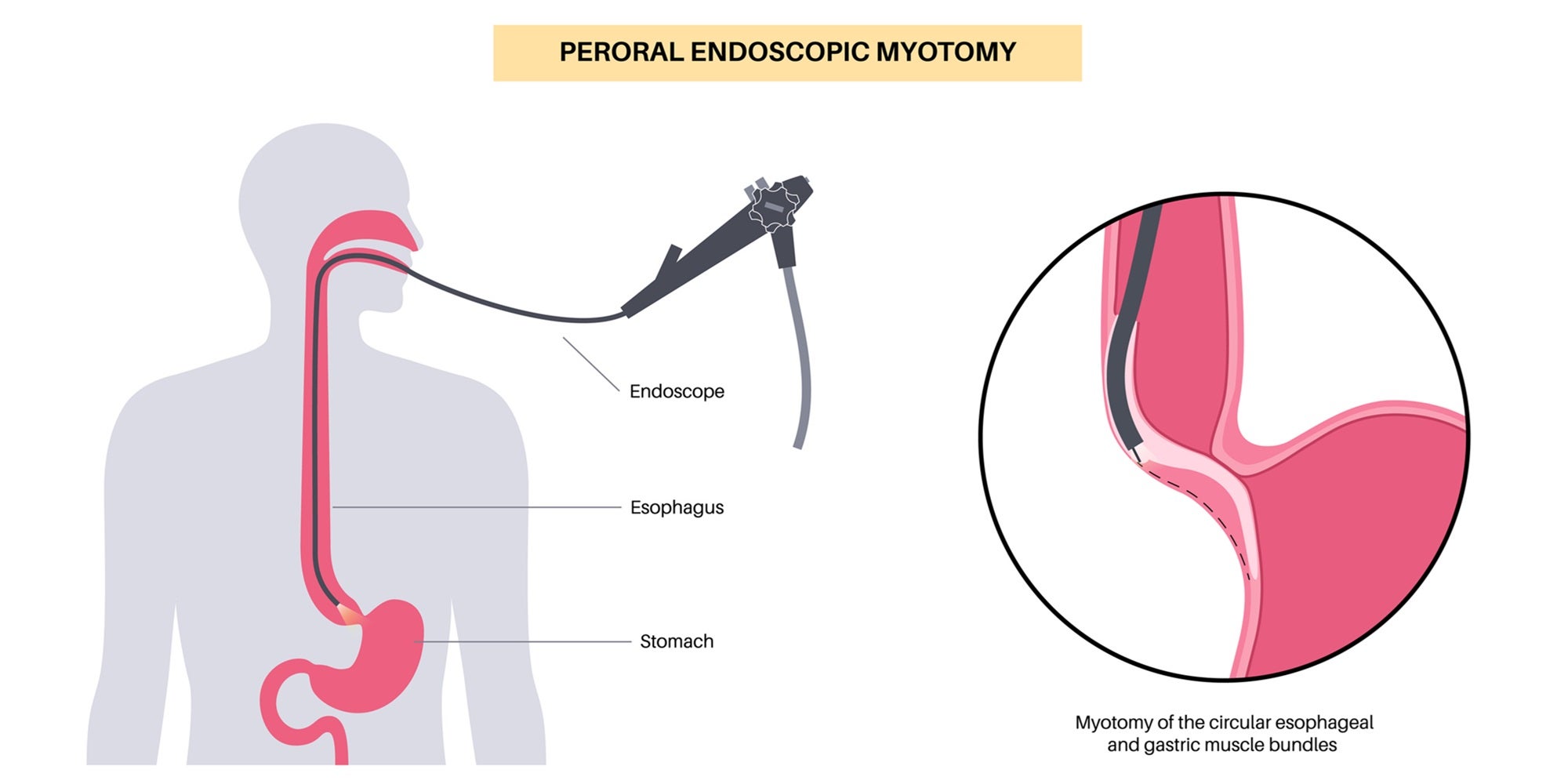
POEM (Peroral Endoscopic Myotomy) is a minimally invasive procedure used to treat disorders that affect how the muscles of the esophagus work. The esophagus is the tube that carries food and liquids from your mouth to your stomach.
These disorders, called esophageal motility disorders (EMDs), occur when the muscles of the esophagus do not work properly to move food and liquids into the stomach.
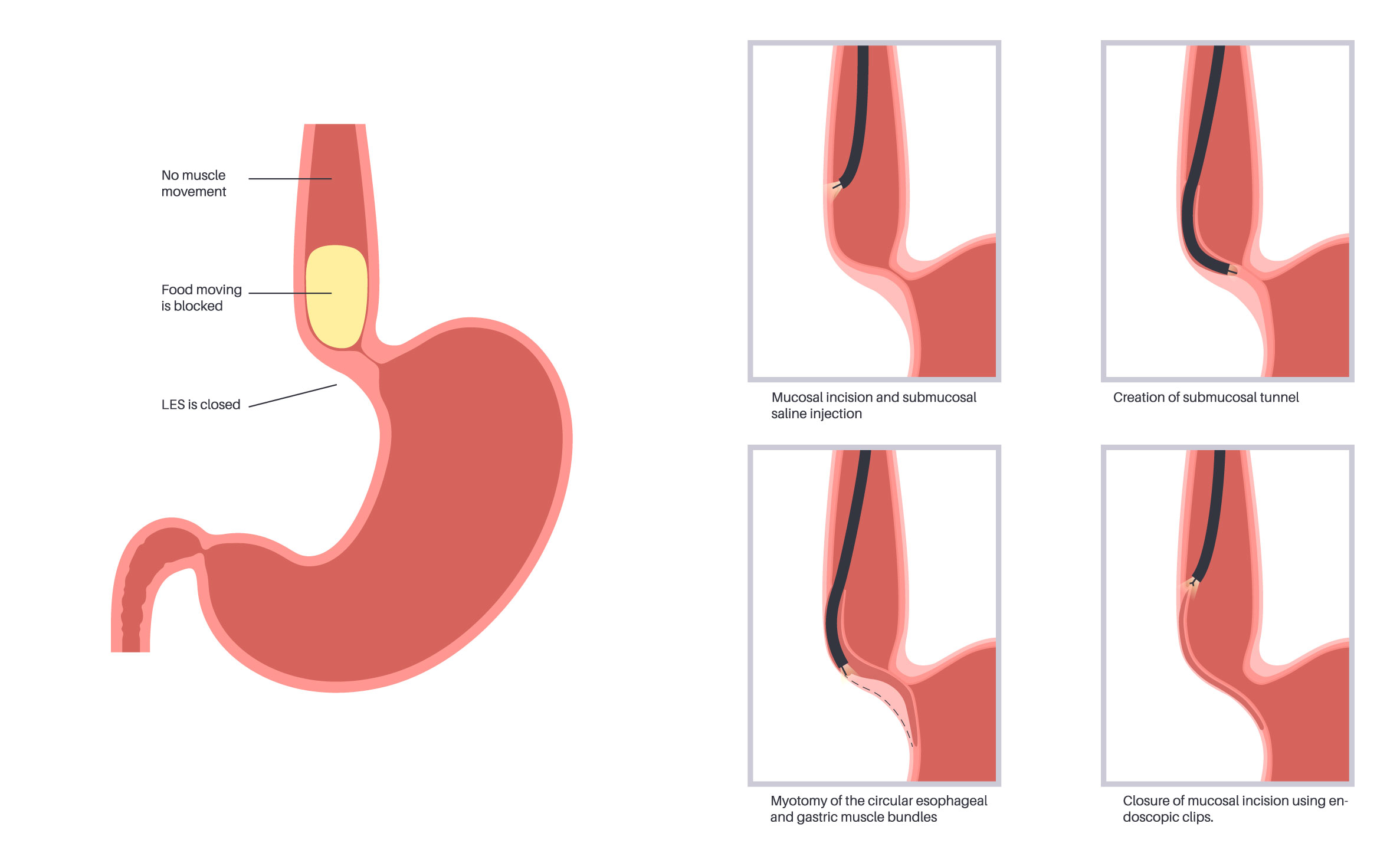
One of the most common esophageal motility disorders is achalasia. Normally, a muscle at the bottom of the esophagus relaxes to allow food and liquids to enter the stomach. In people with achalasia, this muscle becomes too tight, making it difficult for food and drinks to pass through.
Achalasia can occur at any age, and the exact cause is unknown.
Symptoms of Achalasia
Common symptoms include:
- Difficulty swallowing
- Food or liquid coming back up into the throat or mouth (regurgitation)
- Heartburn
- Chest pain
- Feeling like something is stuck in the throat or chest
- Weight loss
- Poor nutrition due to difficulty eating
POEM can also be used to treat other esophageal disorders that cause muscle spasms and do not improve with medication.
How is POEM Performed?
POEM is performed in an operating room while you are under general anesthesia, which means you will be asleep during the procedure.
Using a thin, flexible tube called an endoscope, Dr. Chris Reising enters through the mouth and guides the scope into the esophagus. A small opening is made in the inner lining of the esophagus, creating a pathway between the lining and the muscle layer.
Dr. Reising then carefully cuts the tight muscles causing the blockage. This step, called a myotomy, helps open the lower part of the esophagus so food and liquids can pass into the stomach more easily.
The procedure typically takes about one hour to complete.
Benefits of POEM
POEM offers several advantages, including:
- Faster recovery and a quicker return to normal activities
- No external incisions or visible scars
- Less invasive than traditional surgery
- A treatment option for patients with heart, lung, or kidney conditions
- Suitable for patients with obesity
- Can be performed on patients who have had previous upper abdominal surgeries
What Happens After the Procedure?
After the procedure, you will stay in the hospital overnight so your care team can monitor your recovery.
Before you are allowed to eat or drink, your doctor will order an esophagram (an X-ray of the esophagus) to make sure the treatment area has healed properly and there are no leaks.
During your hospital stay, you will receive:
- IV fluids to prevent dehydration
- Antibiotics to help prevent infection
- Pain medication if needed
Most patients experience little or no pain the day after the procedure.
Recovery and Diet
- After the procedure, you will begin with a full liquid diet.
- After about two weeks, you will progress to a soft-food diet.
- Your doctor will discuss advancing your diet further at your follow-up appointment.
Learn More
If you would like more information about POEM or would like to schedule an appointment to find out if this procedure is right for you, please call (208) 302-2300.