
Canyon County Paramedics, Saint Alphonsus, American Red Cross to bring life-saving prehospital blood transfusions directly to patients
March 9, 2026Tags: Year 2026
Less than 2% of EMS ground programs nationally carry this innovative capability
Canyon County Paramedics, working together with Saint Alphonsus and the American Red Cross, will now deliver lifesaving prehospital whole blood transfusions directly to the region’s patients in need, such as victims of car accidents, falls, snow injuries, bike accidents, and gunshot wounds.
Whole blood is a clinical term referring to the blood, as it flows through the body. It contains all its components including red blood cells, white blood cells, platelets, and plasma, and it is the gold standard for trauma patients who require large volumes of all components of blood. Until now, delivering whole blood transfusions beyond an acute-care setting, like a hospital, has been limited to air medical transport.
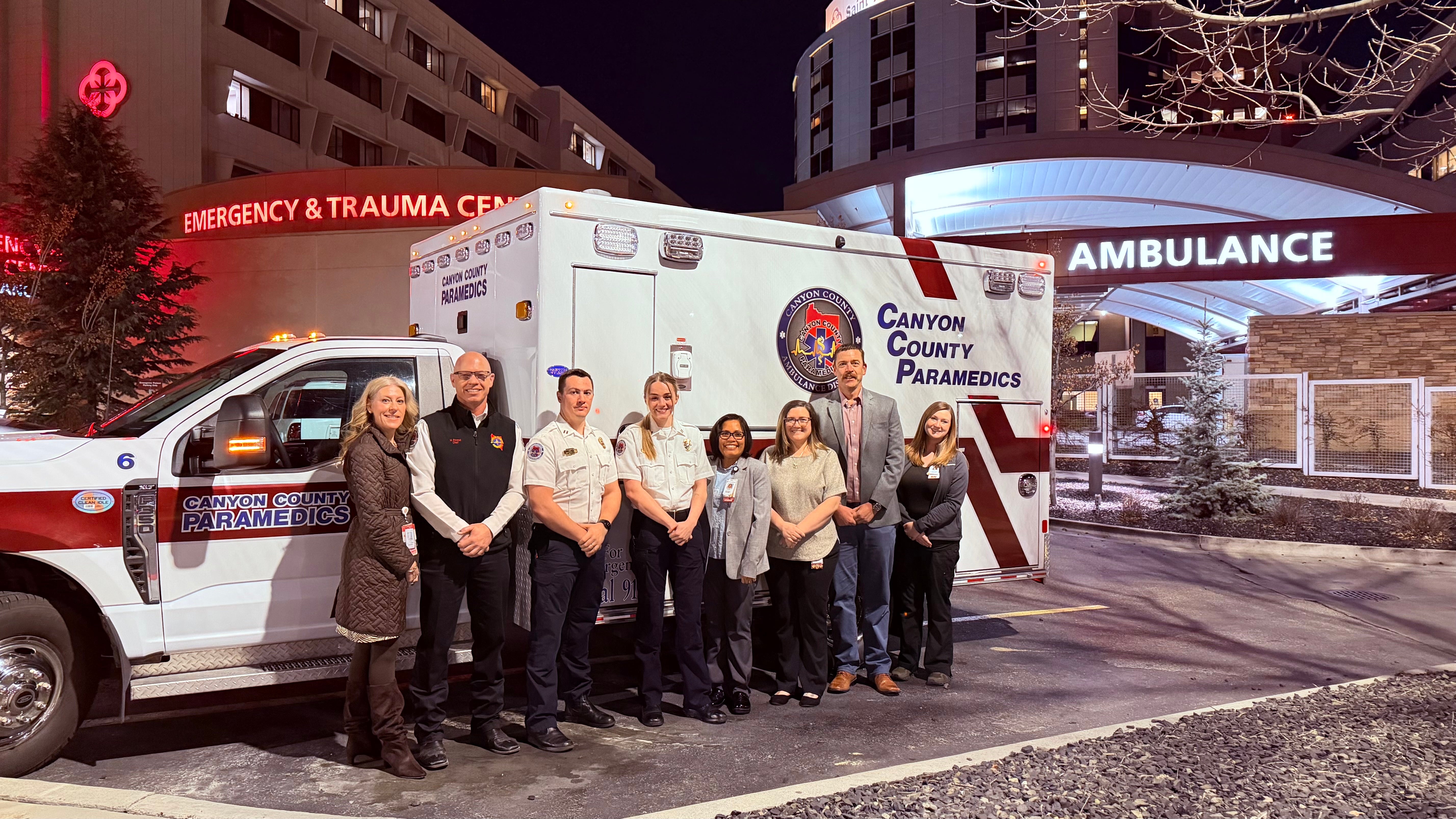 The milestone program, which launched February 1, marks the first ground EMS whole blood capability in Idaho and reflects a multi-year, multi-agency effort built on collaboration, shared resources, and the region’s commitment to improving emergency care for Idahoans. Less than 2% of EMS ground programs nationally have this capability, and experts estimate if deployed nationwide, these programs could save nearly 10,000 lives annually.
“When we begin resuscitation in the field, we can save lives,” said Canyon County Paramedic Chief Michael Stowell. “Studies show that the earlier whole blood is administered, the less blood a patient ultimately needs and the better their chances of survival.”
The whole‑blood program depends on a tightly coordinated partnership between Canyon County Paramedics, Saint Alphonsus, and American Red Cross. Saint Alphonsus Regional Medical Center in Boise supplies and manages the blood inventory, ensuring units are safely stored, temperature‑controlled, and immediately available for field deployment. The Boise hospital serves as the region’s most advanced trauma center, with a 24/7 in-house trauma team dedicated to caring for the most critically ill patients suffering complex traumatic injuries.
From there, paramedics carry whole blood in specialized coolers that maintain stable temperatures for up to 72 hours, returning unused units to the hospital five days before expiration—a system that prevents waste and protects a scarce resource.
“This program extends the reach of the trauma center directly to the patient,” said Saint Alphonsus Trauma Surgeon Dr. Caleb Mentzer. “Moving the administration of whole blood to the prehospital setting not only saves the patient stability and critical time, it saves units of blood, which is in critically short supply nationally.”
Saint Alphonsus provides clinical oversight, quality assurance, and logistical coordination.
The program became financially feasible after voters approved the Canyon County Ambulance District levy in May. The levy provided essential funding to purchase specialized equipment, build an in‑house training program, and secure the infrastructure needed to provide whole‑blood transfusion services. Prior to the levy, the cost of supplying and potentially wasting whole blood made the program unattainable.
“Without the public’s support at the ballot box, this program would not exist,” Stowell said. “Voters made it possible for our teams to carry blood to the roadside, and that investment will save lives here at home. Their tax dollars are coming right back to them in the form of better outcomes and better emergency care.”
The American Red Cross, along with local and national donors, plays a critical role by supplying the whole blood used in the program and working closely with Saint Alphonsus to maintain inventory, ensure quality control, and connect donor contributions to real‑world lifesaving interventions.
“Behind every unit of blood is a donor who chose to roll up a sleeve and help neighbors in need,” said Dharma Nichols, who helps oversee American Red Cross blood operations in Idaho, Montana, and East Oregon. “We’re proud to support efforts that connect that generosity directly to lifesaving care in our communities.”
For more than three years, leaders at Saint Alphonsus, Canyon County Paramedics, and the American Red Cross have partnered with one goal – better patient outcomes.
“This became a reality because we had people at every level who said, ‘yes—how can I help?’ That kind of support saves lives,” said Division Chief Jade Parsons.
Parsons, a veteran flight paramedic for the United States Army, draws on more than a decade of military critical-care and search-and-rescue experience where he gave and taught blood administration. He was responsible for spearheading the critical-care TacMed program and building the training program in-house.
“You don’t see this level of cooperation everywhere in the country,” Parsons said. “Our Treasure Valley truly works as a team.”
As Idaho’s first ground EMS agency to carry whole blood, Canyon County Paramedics hopes the program will serve as a model for others. The team has already shared its training and protocols with agencies across the state, and with whole‑blood administration now included in the paramedic scope, leaders say additional EMS programs are well‑positioned to follow.