
Mako Robotic-Arm Surgery FAQ
What is Mako Robotic-Arm Assisted Knee Surgery?
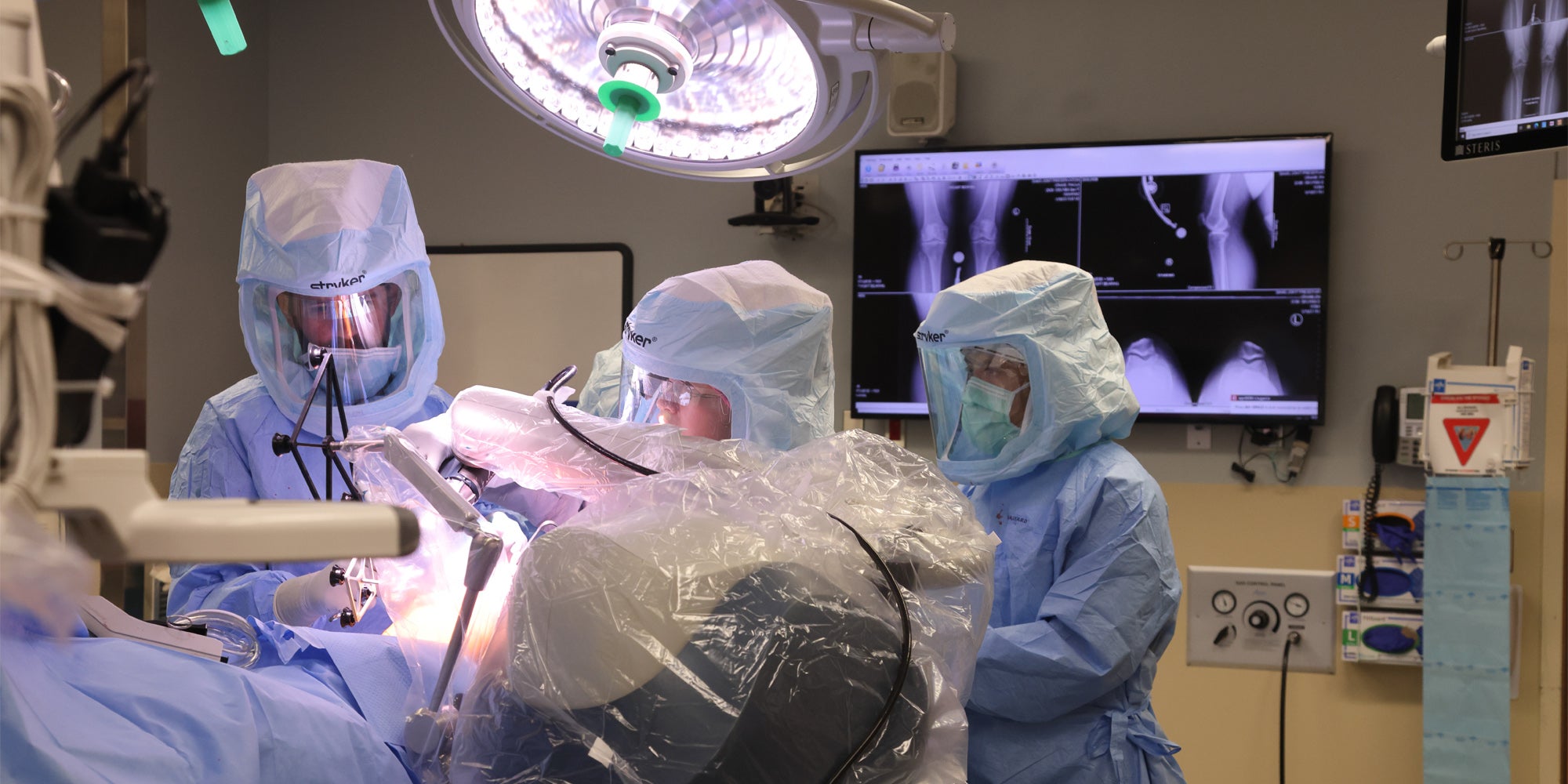
Mako robotic-arm assisted joint replacement is a modern type of knee surgery. It is used to treat adults who have early to middle-stage osteoarthritis (OA) in certain parts of the knee.
The surgeon uses a special robotic system to help guide the procedure. This system improves accuracy and helps the surgeon place the implant in the best position.
As a knee arthroplasty procedure, Mako Robotic-Arm Assisted Joint Replacements typically covered by most Medicare-approved and private health insurers.
To find a Mako Robotic-Arm Assisted Joint Replacement surgeon call 208-302-3500.
FAQs
This procedure may:
- Help the new joint feel more natural
- Allow faster recovery than traditional knee replacement
- Require a shorter hospital stay (sometimes you go home the same day)
- Reduce pain and help you return to daily activities sooner
- Smaller cuts (incisions)
- Less scarring
- Less blood loss
- Shorter time in the hospital
During the surgery:
- Only the damaged part of the knee is repaired.
- Healthy bone and tissue are kept whenever possible.
- A small artificial implant is placed in the knee.
- This helps the knee move smoothly again.
- Some people go home the same day; others stay 1–3 days.
- Many patients can walk shortly after surgery.
- Driving may be possible within about 2 weeks.
- Normal activities can often be resumed fairly quickly.
You may be a good candidate if you:
- Have knee pain during activity (like walking or climbing stairs)
- Feel pain or stiffness when getting up from sitting
- Have not improved with medications or other treatments
The life of the implant depends on things like:
- Your weight
- Your activity level
- Bone health
- Following your doctor’s instructions
Because the robotic system helps with precise placement, it may help the implant last longer.
Osteoarthritis is a condition where the cushioning (cartilage) in a joint wears down over time. When this happens:
- The bones rub against each other
- This causes pain, swelling, and stiffness
The exact cause isn’t always known, but risk factors include:
- Aging
- Past knee injuries
- Repeated stress on the knee
- Being overweight
- Poor joint alignment
Common symptoms include:
- Pain when walking, standing, or using stairs
- Stiffness, especially after sitting or waking up
- Swelling in the knee
- A grinding or cracking feeling in the joint
Your doctor may:
- Ask about your medical history and symptoms
- Examine how your knee moves
- Take X-rays or other scans
- Run blood tests or check joint fluid if needed
Before surgery, doctors often recommend:
- Lifestyle changes (like weight loss or exercise)
- Physical therapy
- Pain medications
- Injections
If these don’t help, surgery may be an option.
- Total knee replacement replaces the entire knee joint.
- This is usually for severe arthritis.
If only part of your knee is damaged, Mako surgery may be a better option.