
Corn on Foot, Mallet Toe and Hammertoe Solutions
Lesser Toe Deformities
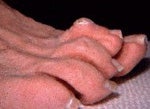
Lesser toe deformities are problems that affect the smaller toes (not the big toe). These issues are often linked to wearing tight or poorly fitting shoes. They are more common in women and tend to happen more often as people get older.
Types of Toe Deformities
Hammertoe
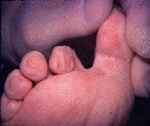
A hammertoe usually affects the second toe.
- The toe bends in the middle and curves downward
- It can become stiff over time
- It may rub against shoes and cause pain
Mallet Toe
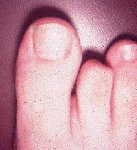
A mallet toe is similar to a hammertoe, but it affects only the tip of the toe.
- The end of the toe bends downward
- Pressure from shoes can make it painful
Symptoms
- Pain when the toe presses against the shoe
- Corns or calluses where the toe rubs
- In more serious cases, open sores (ulcers) or infections can develop if pressure continues
Key Point
Wearing properly fitting shoes can help prevent or reduce these toe problems.
Corns on the Toes
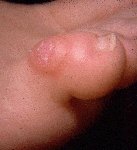
Corns are small areas of thickened skin that form when there is too much pressure or rubbing.
Hard Corn
- A hard corn usually forms on the outside of the little toe (fifth toe)
- It is caused by pressure from tight or poorly fitting shoes
- It can feel firm and painful when pressed
Soft Corn
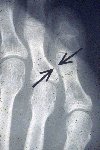
- A soft corn forms between the toes, often in the spaces between them
- It happens when one toe presses against another toe’s bone
- The skin becomes white, soft, and moist
- This area can be very painful to touch
Key Point
Both types of corns are caused by pressure, often from shoes or toe position. Wearing well-fitting shoes can help prevent them.
Hard corns and soft corns are usually treated by removing the bony prominence and occasionally a metal pin is used to stabilize the toe.
The main goal of treatment is to reduce pressure on the toes and relieve pain.
Non-surgical treatment
- Padding can be placed over sore areas to protect the toes and reduce discomfort
- If padding works and pain improves, no further treatment may be needed
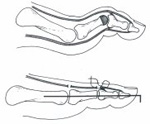
Footwear changes
If padding does not help:
- Wear shoes with a low heel
- Choose shoes with a wide, roomy toe box (the front part of the shoe)
- This helps keep pressure off the toes
Surgical treatment
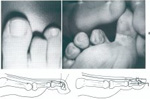
If padding and better shoes do not relieve pain, surgery may be considered.
For hammertoes and mallet toes:
- The surgeon may remove part of the bone causing the problem
- The toe is then straightened
- A small metal pin may be placed inside the toe to keep it straight while it heals
- The pin is usually removed later in the doctor’s office
Key Point
Most people improve with simple treatments like padding and better shoes, but surgery can help if those options don’t work.