

What is AFib?
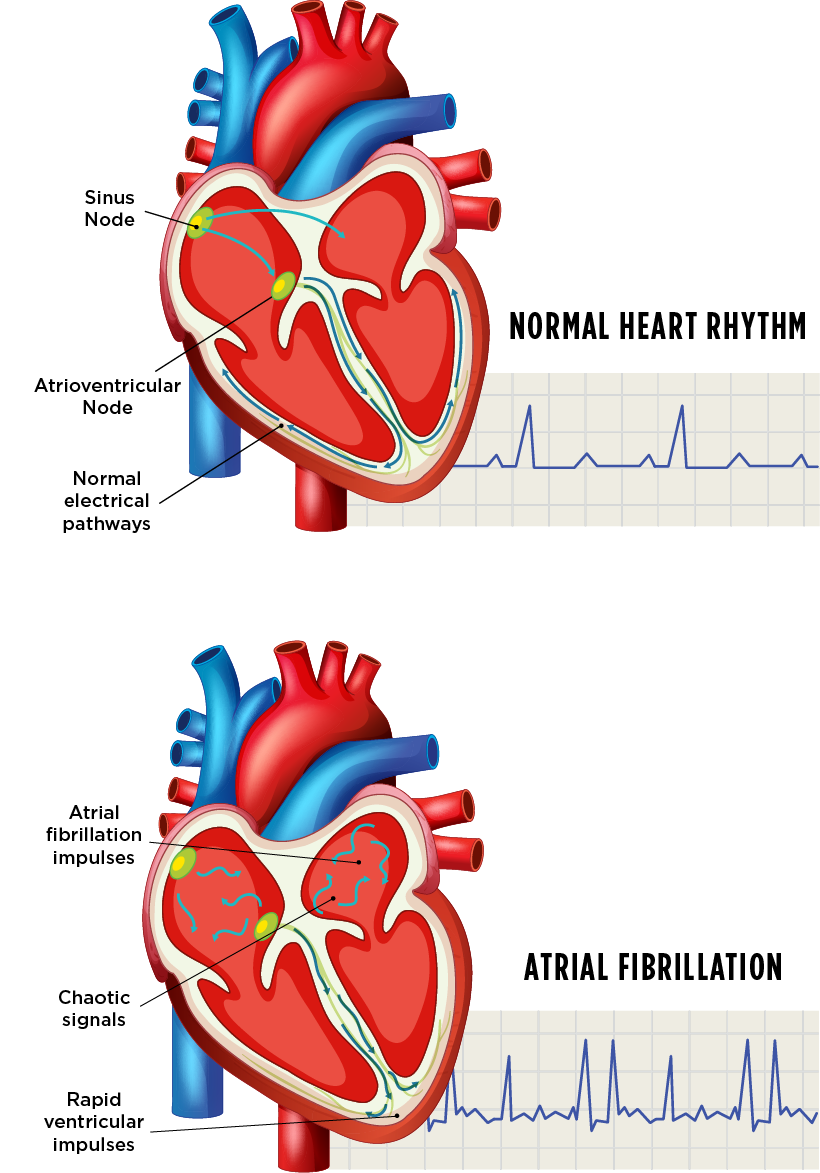
Atrial fibrillation (AFib) is the most common heart rhythm disorder in the U.S. Instead of beating in a steady, coordinated way, the heart signals become fast and irregular, which can affect how efficiently blood is pumped through your body. Some people notice symptoms like fatigue, heart palpitations (a fluttering or racing feeling in the chest), shortness of breath, or dizziness, while others may not feel symptoms at all. Atrial fibrillation can lead to serious complications like a stroke or heart failure if left untreated. That's why it is important to know the symptoms and talk with your doctor about risk factors.
Symptoms
- Racing or pounding heart
- Irregular heartbeat
- Dizziness
- Chest pain
- Shortness of breath
- Weakness
- Fatigue
Causes
Having any of these medical conditions listed below increases the risk of AFib. Other factors that may raise your risk are also: increasing age, excessive alcohol, critical illness and lack of physical activity.
- Other cardiovascular diseases such as coronary artery disease, valve disease and heart failure
- Other medical conditions, such as high blood pressure, being overweight, obesity, hyperthyroidism, chronic kidney disease and obstructive sleep apnea
- Genetic variants
- Heart surgery
AFib stages & Risk Factors
AFib is a progressive condition, meaning it continues to develop over time and if left untreated can lead to serious complications.
Stage 1: At risk for AFib
- High blood pressure
- Obesity
- Diabetes
- Sleep apnea
- Excessive alcohol use
- Age over 65
- Poor cardiovascular endurance
Stage 2: Pre-Afib
Atrial tachycardia Atrial flutter
- Enlarged left and/or right atrium
- Frequent ectopic heartbeats
Stage 3: Afib
- Paroxysmal AFib: Episodes come and go, lasting less than 1 week and usually stop on their own without treatment. You might still feel unwell during these episodes, and you are at higher risk of stroke than those without AFib.
- Persistent AFib: Episodes are continuous, each lasting more than 1 week. You require treatment to stop the episode.
- Long-standing persistent AFib: Episodes are continuous for 1 year or longer.
- Successful AFib ablation: AFib stops after a surgery or catheter-based procedure.
Stage 4: Permanent Afib
- Constantly in AFib: You are no longer trying to manage with treatments.
Management and Treatment
Not everyone with AFib is the same, that's why we offer a variety of treatment options. Working with you, your family, and our medical team, we will create a care plan that is unique to you and your situation.
Lifestyle changes: Your doctor will help you come up with a plan that will allow you to make changes that may keep your AFib from progressing.
Medication Management: Sometimes, atrial fibrillation symptoms can be managed through the use of prescription medication when appropriate.
Catheter Ablation: A minimally invasive procedure, your doctor will guide a thin tube through your blood vessels to your heart. They will then create little scars on specific areas of the heart that are not sending the correct signals. These scars block the abnormal electrical signals to allow your heart to beat in a normal rhythm.
Hybrid MAZE Surgery: Saint Alphonsus is proud to be the only health system offering the Hybrid MAZE procedure in Idaho and the surrounding area.
Other Procedures: Left atrial appendage closure.