
Left Atrial Appendage Closure Procedure
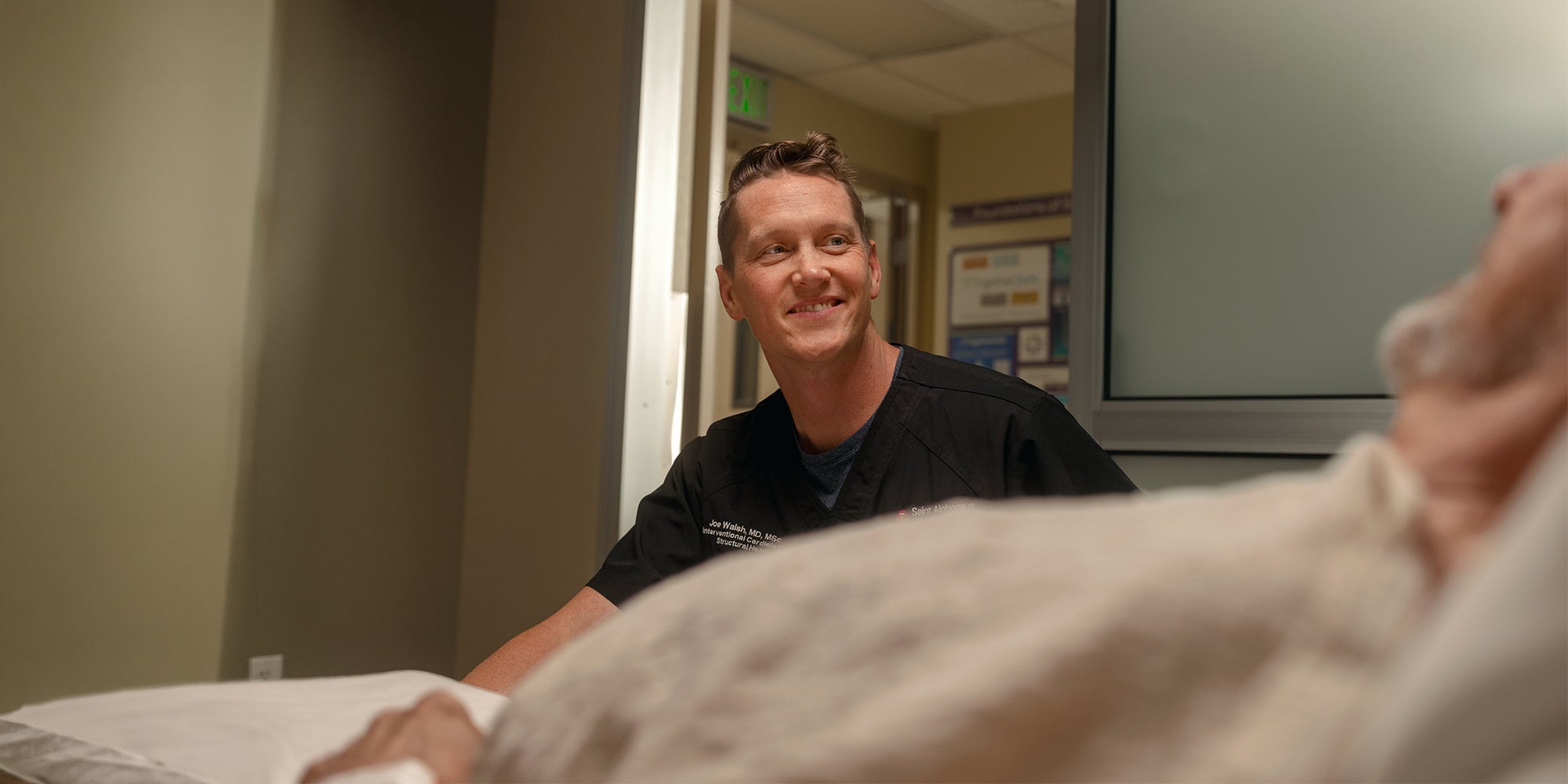
A Minimally Invasive Way to Help Reduce Stroke Risk
The Left Atrial Appendage Closure (LAAC) procedure is a one-time treatment designed for people with atrial fibrillation (AFib) who want an alternative to long-term blood thinner medication. The procedure helps reduce the risk of stroke by blocking a small pouch in the heart called the left atrial appendage, where blood clots commonly form in people with AFib.
The LAAC procedure takes roughly 15 minutes and is performed through a small catheter inserted through the vein of the leg. Patients who are candidates for LAAC using the WATCHMAN or Amulet™ device must have non-valvular atrial fibrillation and be at certain risk for stroke. Patients are usually discharged the same day from the hospital and often safely discontinue their blood thinner 90 days after the procedure when the follow up imaging is done, the device has healed and your doctor confirm results.
Why AFib Increases Stroke Risk
AFib is an irregular heartbeat that can make it harder for the heart to pump blood effectively. When blood does not move normally, it can pool in the left atrial appendage and form clots. If a clot travels to the brain, it can cause a stroke. People with AFib are about five times more likely to have a stroke than people with a normal heart rhythm. More than 90% of stroke-causing clots related to non-valvular AFib form in the left atrial appendage.
Take our assessment to determine if you are a candidate for LAAC.
An Alternative to Blood Thinners
Blood thinners can effectively reduce stroke risk. However, these medications can also increase the risk of serious bleeding, especially for people who have a history of falls, stomach bleeding, or other bleeding-related concerns. For some patients, the LAAC procedure may provide a safe alternative.

More than 90% of stroke-causing clots that come from the heart are formed in the LAA.

How the Procedure Works
During the procedure, a doctor inserts a small catheter through a vein in the leg and guides it to the heart. A specially designed device is placed inside the left atrial appendage to permanently seal it. This helps prevent blood clots from forming in or leaving the appendage while allowing the heart to continue functioning normally. The procedure typically takes about 15 minutes
Most patients go home the same day. About 90 days later, doctors perform follow-up imaging to make sure the device has healed correctly. Many patients can safely stop taking blood thinners at that time if their doctor confirms the results. Most patients continue taking aspirin after the procedure, although a small number may still need long-term blood thinner therapy.
Who May Be a Candidate?
You may be eligible for the LAAC procedure if you:
- Have atrial fibrillation that is not caused by a heart valve problem
- Have an increased risk of stroke
- Are currently taking blood thinners or have concerns about long-term use
- Have a higher risk of bleeding complications
Experienced Care You Can Trust
The Saint Alphonsus Structural Heart Team provides advanced stroke prevention treatment for patients with AFib. In 2023, the team performed 167 LAAC procedures and reported a 0% complication rate.
Learn More
To find out whether the LAAC procedure is right for you, contact the Saint Alphonsus Heart Institute - Boise and speak with a member of the structural heart team about your treatment options.
Learn More About Left Atrial Appendage Closure & Watch Sharon's LAAC Story
What is Left Atrial Appendage Closure?


Related Providers

Mark Parent, MD
Interventional Cardiology
Accepting New Patients
Saint Alphonsus Medical Group

Jeffrey Heslop, MD
Interventional Cardiology +1 more
Accepting New Patients
Saint Alphonsus Medical Group

Nicholas Hodgman, MD
Interventional Cardiology +1 more
Accepting New Patients
Saint Alphonsus Medical Group

George Samaan, MD
Interventional Cardiology
Accepting New Patients
Saint Alphonsus Medical Group

Alex Johnson, MD
Interventional Cardiology
Accepting New Patients
Saint Alphonsus Medical Group

Danielle Fowler, NP
Interventional Cardiology
Accepting New Patients
Saint Alphonsus Medical Group

Kendra Coonse, MD
Interventional Cardiology
Accepting New Patients
Saint Alphonsus Medical Group

Joe Walsh, MD
Interventional Cardiology +1 more
Accepting New Patients
Saint Alphonsus Medical Group

Rosie Jasper, DO
Interventional Cardiology
Accepting New Patients
Saint Alphonsus Medical Group
