Integrated Aortic Program

The body’s largest artery, the aorta, delivers oxygenated blood from the heart to various organs and tissues. When the walls of the aorta weaken, an aortic aneurysm or dissection can occur. These conditions can be detected through imaging and treated. If left untreated, aortic aneurysms can lead to serious, life-threatening complications, such as an aortic dissection (rupture of the walls of the aorta).
Saint Alphonsus brings together an integrated team of cardiac and vascular surgeons, as well as cardiologists, radiologists and other specialists to provide a comprehensive diagnostic, surgical, and surveillance program for patients with aortic aneurysms. Our team is committed to providing high-quality care, using leading-edge technology to offer patients the best treatment possible, right here in Idaho.
Conditions Treated
- Thoracic aortic aneurysm
- Bicuspid aortic valve (BAV)
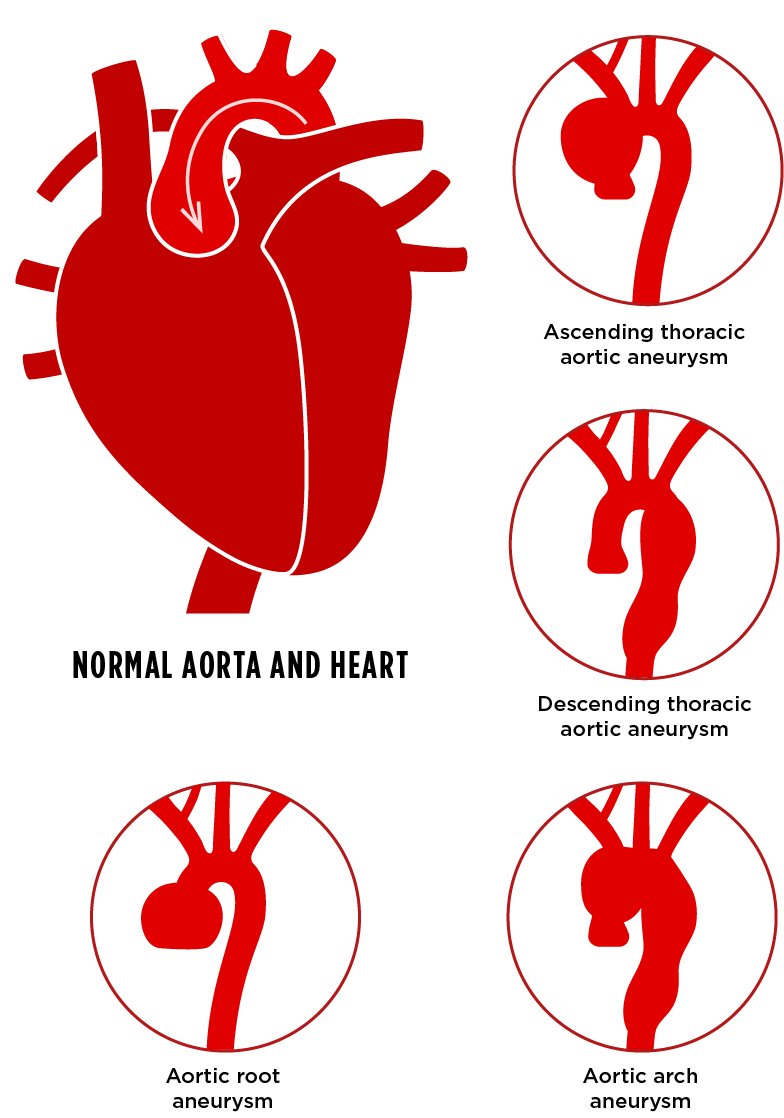
- Aortic root aneurysm
- Ascending and descending aortic aneurysm
- Aneurysms of the aortic arch
- Thoracic aortic aneurysm
- Thoracaobdominal aortic aneurysm
- Abdominal aortic aneurysm
- Aortic dissection (Stanford Type A)
- Transverse Arch Aneurysm
- Descending Aortic pathology (Type B Dissections)
Risk Factors
The following conditions increase the risk of developing aortic aneurysm
- Smoking, plaque buildup
- High blood pressure (hypertension) and family history
- Genetic conditions (Marfan syndrome, Lloeys Dietz, Ehlers-Danlos)
- Previous Aortic Surgery and/or aneurysms
Genetic Testing
Through genetic testing, our team can identify pathogenic variants in single genes linked to heritable thoracic aortic disease (HTAD). We recommend patients with early-onset aneurysms, multiple aneurysms, or a family history or aortic aneurysms, to get tested. If a specific disease-causing mutation is found, our team can tailor a care plan accordingly.
Diagnosing and Imaging
Accurate imaging is crucial to diagnosing and treating aortic aneurysms. Our state-of-the-art imaging facility offers MRI, CT, and echocardiography – all guided by imaging experts and reviewed by our integrated clinical team provide personalized treatment plans for our patients. This imaging helps pinpoint the location of an aneurysm and other heart issues that could impact the treatment plan, including aortic regurgitation (leaking valves) or aortic stenosis (blocked or narrowed valves).
Surveillance
Not all aortic aneurysms require immediate action. That’s why Saint Alphonsus offers ongoing follow-up and management to monitor a patient’s aortic aneurysm to determine if surveillance or surgical intervention is needed. Screening and ongoing surveillance is also available for patients who have family members that are diagnosed with aortic aneurysm, since the condition can run in the family. Treatment
For aortic aneurysms that require treatment, including repairs of interventions that have been performed elsewhere, Saint Alphonsus offers the most advanced interventions in the region to stop tears, leakage, or other complications. We offer open surgery that replaces the damaged segment of the artery with a graft. We also perform minimally invasive repairs, addressing aneurysms using catheters threaded through blood vessels. An endograft, or wire scaffolding with attached fabric, relines the aneurysm from inside the artery. This approach is often appropriate for older patients with related conditions.
Talk to a Cardiovascular Expert
If you’ve been diagnosed with an aortic aneurysm, or have a family member who has, contact our experts to schedule a consultation to learn more about our integrated diagnostic, surgical, and surveillance aortic program today.